

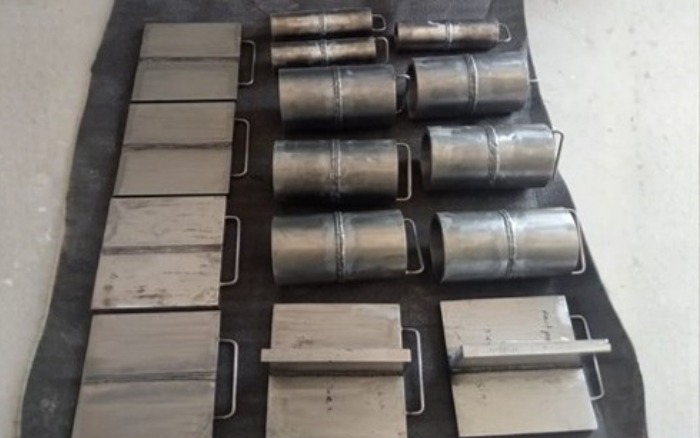
In the demanding world of non-destructive testing (NDT), the importance of training and qualification cannot be overstated. One of the most effective tools for advancing inspector skill and maintaining high-quality assurance is the use of NDT flawed specimens — precisely engineered test blocks that mimic real, industrial defects. At Real Defect NDT Tools Pvt. Ltd., we understand that flawed specimens are not just learning aids; they are critical assets for procedure validation, equipment verification, and inspector certification across a wide range of NDT methods.
Flawed specimens are manufactured with exacting detail to reproduce conditions such as fatigue cracks, stress corrosion cracking, hydrogen-induced damage, porosity, and micro-cracks. These defects are intentionally embedded in materials commonly used in industry, such as stainless steel, carbon steel, and high-alloy metals. Because these specimens reflect real-world flaw types, they provide inspectors with a realistic and controlled environment in which to hone their detection and evaluation skills. Rather than relying solely on theory or simulation, trainees can observe how actual discontinuities respond to ultrasonic, eddy current, or radiographic testing.
One of the biggest advantages of flawed specimens lies in their role in training and certification. For NDT professionals working toward qualifications under standards like ISO 9712, SNT-TC-1A, ASME, or API, practical experience is invaluable. Inspectors must learn how subtle signals correspond to different kinds of flaws, and flawed specimens bridge the gap between textbook learning and on-site inspections. By using these specimens, inspection teams can standardize training, ensuring that every inspector gains consistent exposure to the same defect types under the same testing conditions. This uniformity reduces variability and helps build a more reliable workforce.
Beyond training, flawed specimens are indispensable in procedure qualification and validation. Before an inspection method is deployed in a critical environment — such as a power plant, a pipeline, or an offshore platform — it must be validated. Real Defect NDT Tools’ flawed specimens allow companies to verify that their chosen NDT technique can detect specific defect types at the required sensitivity levels. Whether it’s Pulse-Echo Ultrasonic Testing (UT), Phased Array UT (PAUT), Time-of-Flight Diffraction (TOFD), or Eddy Current Testing (ET), using realistic flawed blocks ensures that validation is not theoretical, but grounded in actual material behavior.
Instrumentation is another area where flawed specimens bring value. High-performance NDT instruments must be regularly checked to confirm that their defect-detection capabilities remain intact. Flawed specimens serve as reference points to assess the performance of probes, couplants, scanning mechanics, and signal-processing systems. By routinely scanning these test blocks, companies can detect drifts in sensitivity or calibration—preventing false negatives or missing critical flaws in real components.
Real Defect NDT Tools Pvt. Ltd. specializes in manufacturing a diverse array of flawed specimens tailored to industry needs. For example, we produce HTHA (High-Temperature Hydrogen Attack) samples that replicate microscopic damage caused by hydrogen embrittlement. These are critical for oil & gas and petrochemical sectors where hydrogen exposure is a risk. Similarly, our IGSCC (Intergranular Stress Corrosion Cracking) blocks simulate crack patterns in stainless steels exposed to corrosive environments, enabling inspectors to develop the skill of recognizing and sizing such defects. We also design HIC (Hydrogen-Induced Cracking) samples, micro-crack blocks for phased-array applications, and fully customized flawed specimens based on client specifications.
The use of flawed specimens transcends industries. In aerospace, where structural integrity is non-negotiable, inspectors train on these blocks to ensure that even the smallest crack will be reliably detected. In the power generation and manufacturing sectors, flawed specimens support routine inspection planning and operator re-certification. Even in heavy construction and automotive communities, they provide a controlled environment to test new NDT procedures or to qualify new personnel before field deployment.
Choosing Real Defect NDT Tools for flawed specimen supply brings significant advantages. Our defect creation process uses state-of-the-art machining techniques such as VMC (Vertical Machining Centers), EDM (Electrical Discharge Machining), and precision finishing so that each defect is repeatable, measurable, and traceable. We maintain strict compliance with international standards like ASME, API, and ISO, ensuring that our test blocks are acceptable for global procedure qualifications and inspector certifications.
In summary, flawed specimens are more than just test pieces — they are practical training tools, verification standards, and critical components for risk mitigation in NDT programs. With realistic simulation of industrial defects, they elevate the competency of inspectors, reinforce procedure robustness, and strengthen the reliability of inspection equipment. At Real Defect NDT Tools Pvt. Ltd., we are dedicated to supplying world-class flawed specimens that support safer, more accurate, and more trustworthy non-destructive testing practices.
Call to Action: If you want tailored flawed specimens to match your inspection needs, contact Real Defect NDT Tools Pvt. Ltd. to discuss custom design, material choice, and defect configuration.