

Traditional Ultrasonic Testing (UT) uses high-frequency sound waves to detect internal defects in materials. It remains one of the most trusted and widely used NDT methods. However, the limitations of conventional UT — such as dependence on operator skill and single-angle inspection — have driven industries toward advanced technologies.
This is where Phased Array Ultrasonic Testing (PAUT) steps in. Unlike conventional UT, PAUT uses multiple ultrasonic elements and electronic beam steering to scan large areas quickly. The result? A detailed visual map of internal structures and defects with precise sizing and location accuracy.
VAPQ Real Defect supports both methods — ensuring clients have the right testing solution based on project requirements, component geometry, and criticality.
The Rise of Eddy Current Testing (ECT)
For surface and near-surface inspection, Eddy Current Testing (ECT) offers unmatched speed and sensitivity. By using electromagnetic induction, ECT detects surface cracks, corrosion, or material variations in conductive materials like aluminum and stainless steel.
Its applications span multiple sectors — from aerospace and marine to automotive and power generation. ECT provides a fast, contactless way to assess surface integrity without using couplants, making it ideal for environments where speed and cleanliness matter.
Integration of Advanced Technology
Modern NDT techniques are no longer just about flaw detection — they’re about data-driven precision. Digital tools, imaging software, and automated scanning systems have transformed the inspection process into a high-resolution analysis.
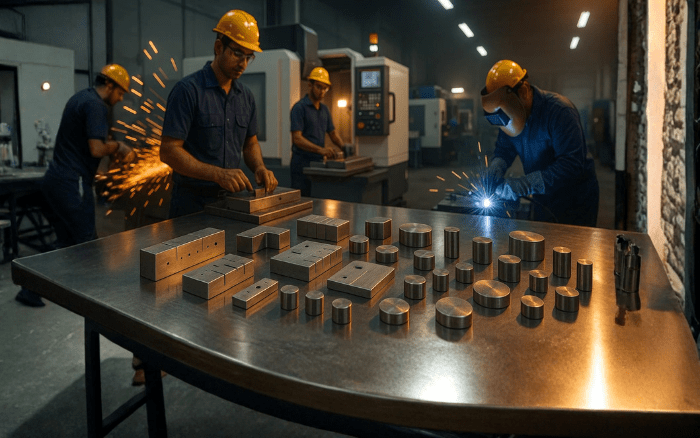
At VAPQ Real Defect, we incorporate advanced calibration, automated systems, and simulation-based training tools to ensure our technicians and clients experience the full potential of these innovations. Our PAUT calibration blocks and validation specimens are designed to match the performance needs of these cutting-edge techniques, ensuring equipment accuracy and operator confidence.
Why Advanced NDT Matters
Every industry today demands not only quality but quantifiable reliability. Whether in oil and gas pipelines, wind turbine blades, or aircraft fuselages, a single undetected defect can result in costly downtime or catastrophic failure.
Advanced NDT methods like PAUT and ECT offer more than just inspection — they offer predictive insights, enabling early detection and proactive maintenance. This shift from reactive testing to preventive inspection is redefining how industries approach safety and sustainability.
VAPQ Real Defect’s Role in the Future of NDT
As industries modernize, so does the need for reliable inspection partners. VAPQ Real Defect bridges traditional and future-ready testing with its certified calibration blocks, realistic flawed specimens, and customized validation kits.
Our focus is not just on supplying products but on empowering accurate, repeatable testing through education, innovation, and precision engineering. With our blend of technical expertise and advanced manufacturing, we help NDT professionals deliver consistent, standard-compliant, and high-performance results across all inspection scenarios.
Conclusion
From conventional UT to advanced PAUT and ECT, the evolution of NDT is shaping a smarter, safer industrial world. As technology grows, the value of accurate calibration and skilled inspection grows with it.
At VAPQ Real Defect, we are proud to support this progress — one calibration block, one innovation, and one inspection at a time.