

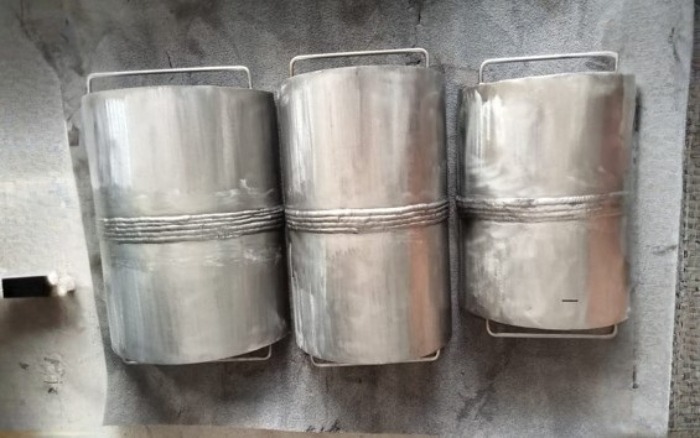
In the field of Non-Destructive Testing (NDT), one of the most vital elements of any inspection program is the ability to verify the performance of testing equipment before it is deployed on real components. While calibration blocks are used to fine-tune instruments, NDT validation blocks are designed to confirm whether the equipment is truly capable of detecting flaws under specific conditions. They act as the final gatekeeper of inspection reliability, ensuring that the techniques, settings, and tools used in the field can perform accurately in real-world environments. At Real Defect NDT Tools Pvt. Ltd., our validation blocks serve as essential quality assurance instruments that strengthen trust in NDT results and support compliance with industry standards.
Validation blocks are engineered with carefully constructed reflectors, simulated defects, and geometrical features that mimic actual field conditions. Their objective is not simply to calibrate the instrument but to assess whether the inspection method is appropriate and effective for the intended application. This distinction is critical in sectors where inspection outcomes determine safety, operational continuity, and compliance with regulatory standards. Whether inspecting pipelines, pressure vessels, welds, or structural components, technicians must have absolute confidence that their equipment will reliably detect flaws. Validation blocks provide this assurance through controlled, measurable, and repeatable testing environments.
One of the most important strengths of validation blocks is their role in procedure verification. Before an inspection procedure is approved for use, it must be validated to demonstrate that it can identify the flaws it is intended to detect. Validation blocks allow technicians and engineers to test new ultrasonic or advanced ultrasonic techniques — including PAUT and TOFD — on blocks with known reflectors. By observing how these reflectors appear on the instrument display, inspectors can confirm whether the chosen method is appropriate and if adjustments are needed in probe selection, scanning angles, sensitivity, or gain. This process transforms theoretical procedures into proven, field-ready inspection plans.
Validation blocks are also instrumental in performance demonstration (PD) programs. Many industries require operators to demonstrate their ability to detect specific defect types before performing inspections in the field. For example, oil and gas companies, nuclear facilities, and aerospace manufacturers all have strict performance criteria for their NDT teams. Using validation blocks, technicians conduct scans to show that their equipment setup, scanning technique, and flaw interpretation skills meet the thresholds required for defect detection. This ensures that operators are not only certified on paper but are practically competent in detecting flaws of specific sizes, depths, and orientations that match real operating conditions.
Another crucial aspect of validation blocks is their role in detecting equipment deterioration or drift. Over time, NDT instruments may lose sensitivity or produce inconsistent amplitude responses. Environmental factors such as temperature, humidity, vibration, or electromagnetic interference may affect performance. By periodically checking instrument response using validation blocks, technicians can identify deviations early and take corrective actions before inspections begin. This proactive approach prevents costly rework, missed defects, or false indications that could compromise structural integrity or safety.
Real Defect NDT Tools Pvt. Ltd. manufactures validation blocks with extreme precision, using advanced equipment like VMCs, EDM machines, and high-accuracy surface grinding systems. These tools allow us to machine reflectors with exact dimensions, ensuring consistency and repeatability. Our validation blocks support a wide range of NDT techniques, including conventional UT, phased array UT (PAUT), and TOFD. Regardless of the inspection method, each validation block is crafted to simulate realistic inspection scenarios that challenge both equipment and operator skill. This helps ensure that NDT processes are not just theoretically sound but practically effective.
One of the key benefits of using validation blocks from Real Defect NDT Tools is the assurance of compliance with international standards. Industries today operate under strict regulatory guidance from organizations such as ASME, API, ISO, and AWS. These standards often specify how validation must be performed, what reflectors should be used, and how equipment performance must be demonstrated. Our validation blocks are designed to meet these requirements, supporting certification audits and ensuring organizations remain compliant during inspections. When auditors review documentation, validation block results provide concrete evidence that an organization is following proper inspection protocols.
Validation blocks also support training and skill enhancement. For new inspectors learning advanced methods such as PAUT or TOFD, practicing on validation blocks helps build confidence in interpreting diffracted waves, phased array signals, and other complex ultrasonic patterns. Unlike flawed specimens that focus on defect realism, validation blocks ensure that the equipment setup itself is accurate, stable, and capable of producing the required detection threshold. Training centers and certification bodies rely heavily on these blocks during practical examinations, helping students transition smoothly from classroom learning to real-world application.
In modern industries where downtime is expensive and safety is non-negotiable, validation blocks help create a predictable and trustworthy inspection ecosystem. In oil and gas refineries, they verify that technicians can detect corrosion, hydrogen-induced damage, or weld flaws before critical shutdown inspections. In power plants, they help confirm the reliability of ultrasonic equipment used in turbine, boiler, and piping inspections. In aerospace, they ensure that defect detection is consistent across various materials and components. Regardless of the application, validation blocks empower companies to maintain high-quality inspection practices that reduce risk and support long-term operational reliability.
In conclusion, NDT validation blocks are indispensable tools for verifying the accuracy, suitability, and reliability of inspection equipment and procedures. They allow companies to assess real-world inspection capability, validate processes before deployment, and maintain compliance with the industry’s strictest standards. At Real Defect NDT Tools Pvt. Ltd., we are committed to manufacturing validation blocks with uncompromising precision, helping industries achieve consistent inspection performance and maintain the highest levels of safety. When inspections must perform flawlessly, validation blocks ensure that your methods and equipment are ready for the challenge.
Call to Action: For precise, standards-compliant NDT validation blocks tailored to your inspection requirements, connect with Real Defect NDT Tools Pvt. Ltd. and strengthen your inspection reliability today.